Facial Treatment & Surgery
Rhinoplasty
Rhinoplasty
Refine the bridge, tip, and base of the nose for balanced proportions — using medical-grade implants or your own cartilage for natural, lasting shape.
What is rhinoplasty?
Rhinoplasty reshapes the bridge, tip, and alae of the nose into proportions that balance the face, using medical-grade implants or your own cartilage.
Your surgeon assesses your existing framework, skin thickness, and facial proportions to select a closed or open technique and the right material — for a natural result that stays safe long term.
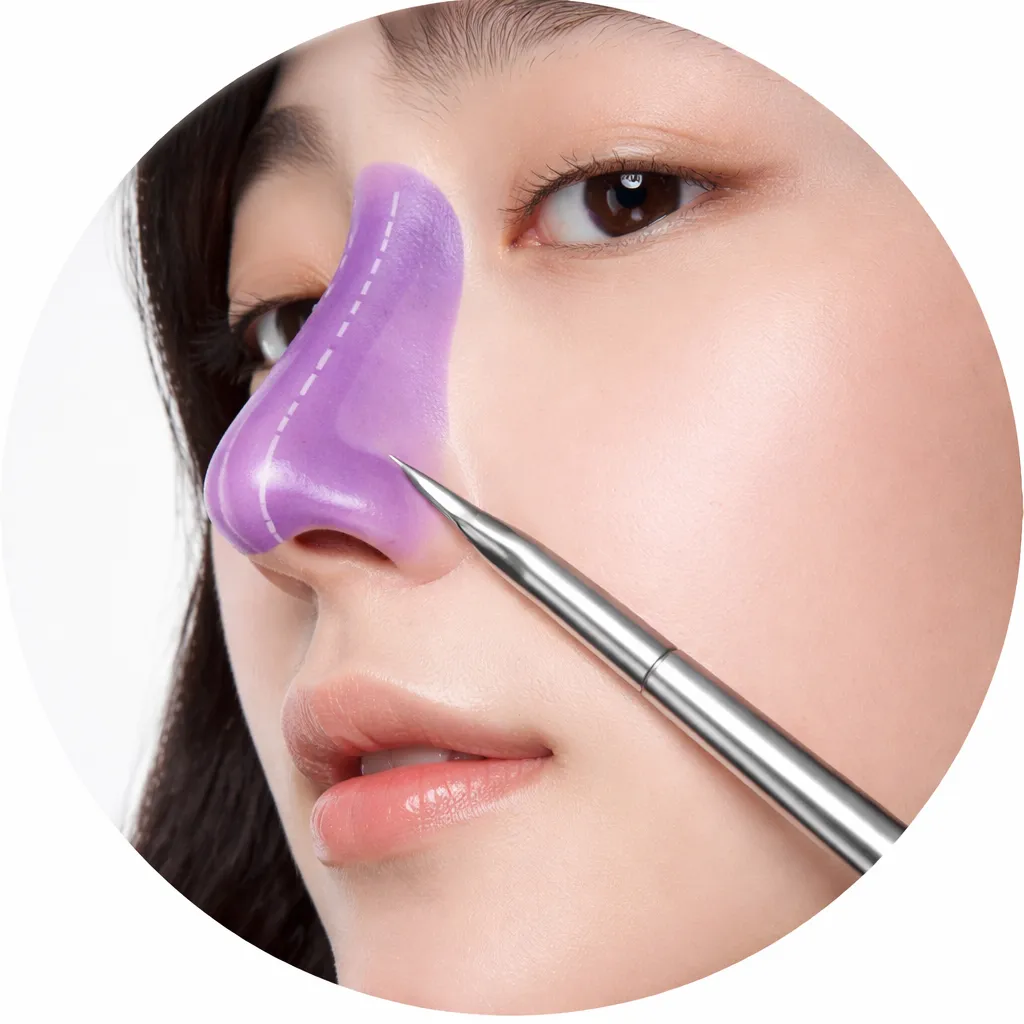
What it addresses
Low / flat bridge
A bridge without height makes the face look flat and the nose lack definition.
Bulbous / ill-defined tip
A large, round, or wide tip leaves the nose looking ill-defined even with a high bridge.
Wide alae / base
Wide nostrils or a broad base keep the nasal base from looking refined.
Deviated / crooked nose
A bridge or tip that leans to one side makes the face look asymmetric.
YOUNIFY
Why choose YOUNIFY
Facial proportion
The nose sits at the center of the face and draws the eye. Bridge height, tip length and rotation, and base width all have to relate to the forehead, lips, and chin — so the shape is designed against the whole face, not simply built as high as possible.
Your planning options
Who is it for
Those with a flat or low bridge, or an ill-defined tip
Those with wide alae wanting a slimmer base
Those seeking revision of a previous rhinoplasty
Those in good health with no contraindications to surgery
Incision options
Closed (endonasal) technique
ProsAll incisions hidden inside the nostrils, no external scar, less swelling.
NoteMore limited surgical view; best for straightforward augmentation.
Open (external) technique
ProsClear view of the framework for tip work and complex or revision cases.
NoteA small incision at the columella that fades once healed.
Your care pathway
Consult & analyze the profile
Assess your existing framework, skin thickness, and side profile, and hear your goals.
Choose material & technique
Select silicone, Gore-Tex, or cartilage and a closed/open technique to suit the case.
Prepare for surgery
Fitness checks, pausing certain medications, and preparation guidance.
Surgery day
Performed in a standard operating theatre by a specialist surgeon and anesthesia team.
Aftercare
A nasal splint, a swelling-and-bruising program, and wound-care guidance.
Follow-up
Splint and suture removal, with reviews as the shape settles.
Recovery timeline
A nasal splint is worn; cold compresses help; mild bruising around the eyes is normal.
Splint and sutures are removed; swelling visibly subsides.
The shape begins to settle; normal activities can resume.
The tip and shape fully settle for the most natural result.
Price list
* Indicative prices for reference only. Some items are priced per area. Final pricing depends on an individual assessment. Overseas prices are indicative market estimates for comparison only — contact our team for a personalized quote.
Before & After
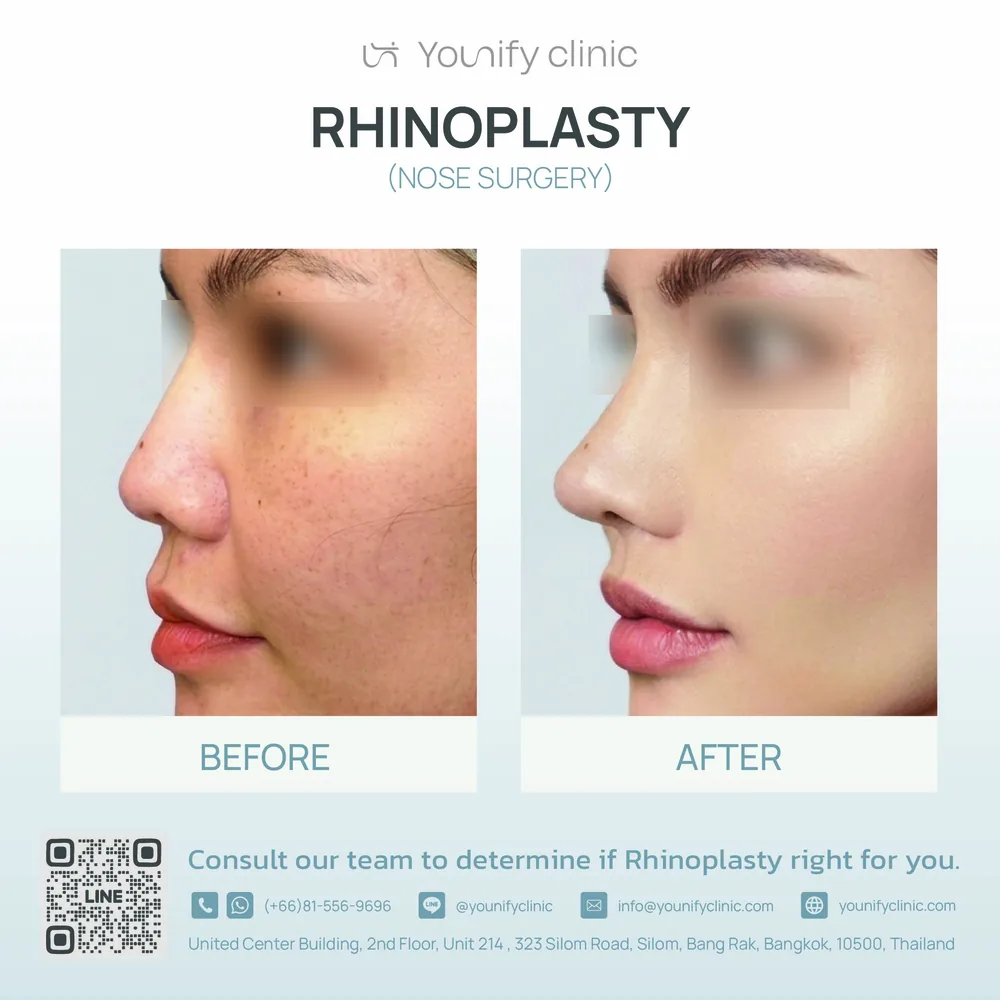
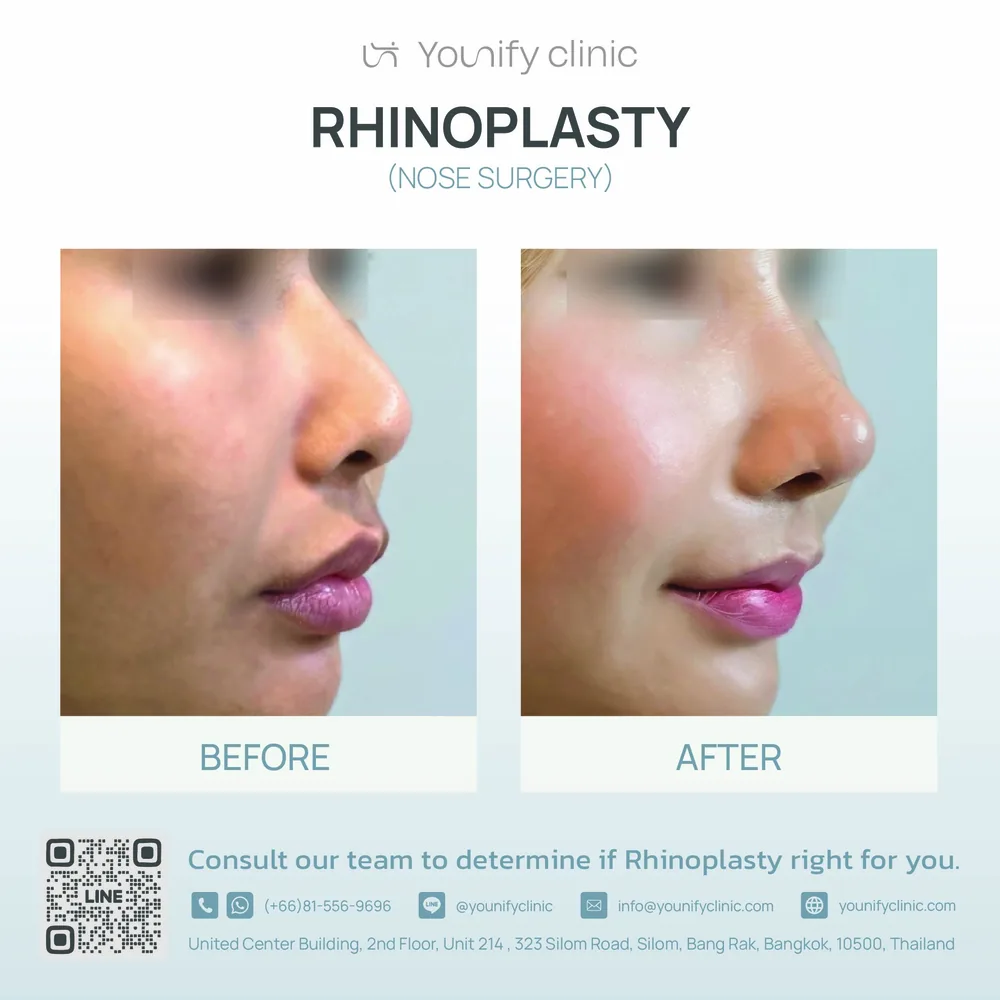
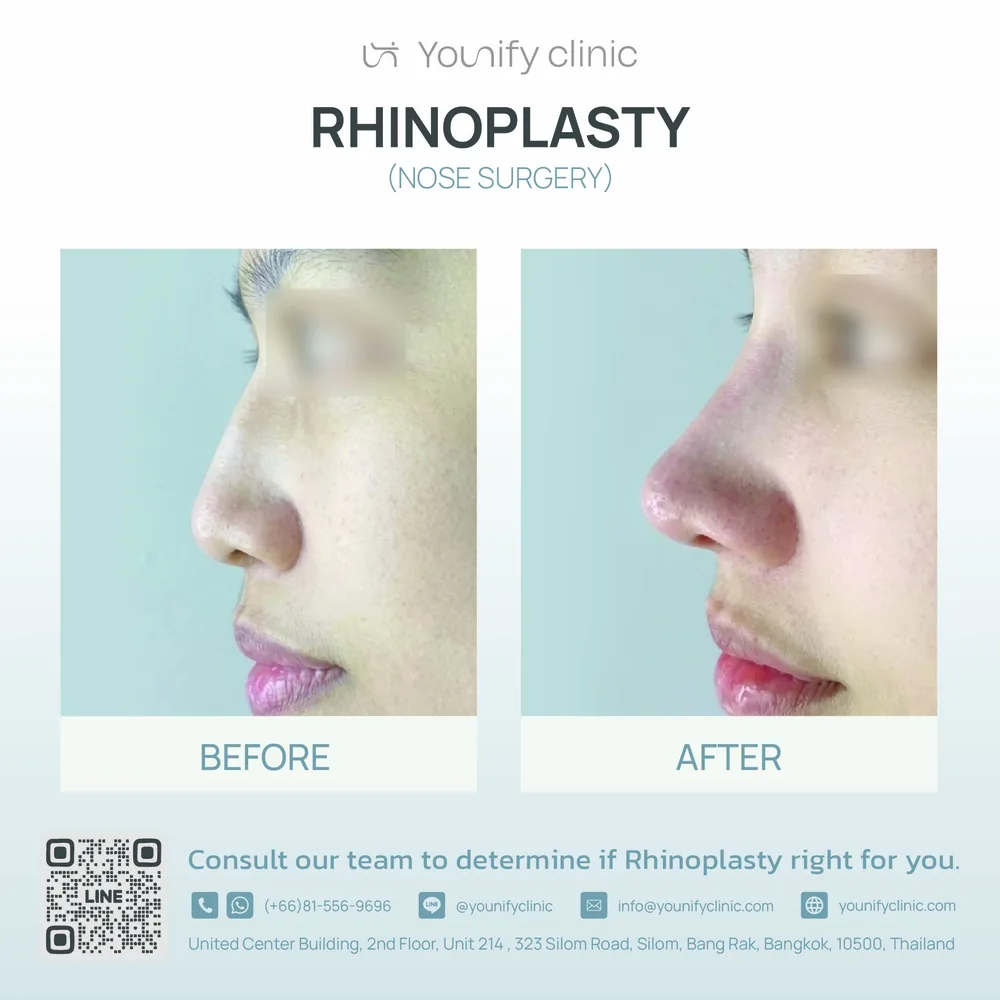
* Real patient results, published with consent — individual results may vary.
Frequently asked questions
Implant or cartilage — which is better?
It depends on your framework and goals. Silicone gives a defined bridge; cartilage suits the tip and those preferring natural material. Your surgeon advises per case.
Will the nose feel stiff or risk extrusion?
Choosing the right material and placement with a specialist greatly reduces risk, and proper aftercare is important.
How long does it last?
Medical-grade materials are highly durable and can last many years with good care; periodic follow-up is recommended.
Can a previous nose job be revised?
Yes. Revision requires assessing the existing structure and tissue; your surgeon plans it individually.
* This information is for general education. Results and treatment plans depend on an individual medical assessment.
Related procedures
Interested in rhinoplasty?
Book a consultation to assess your nasal structure and plan a personalized treatment with the YOUNIFY Clinic team.