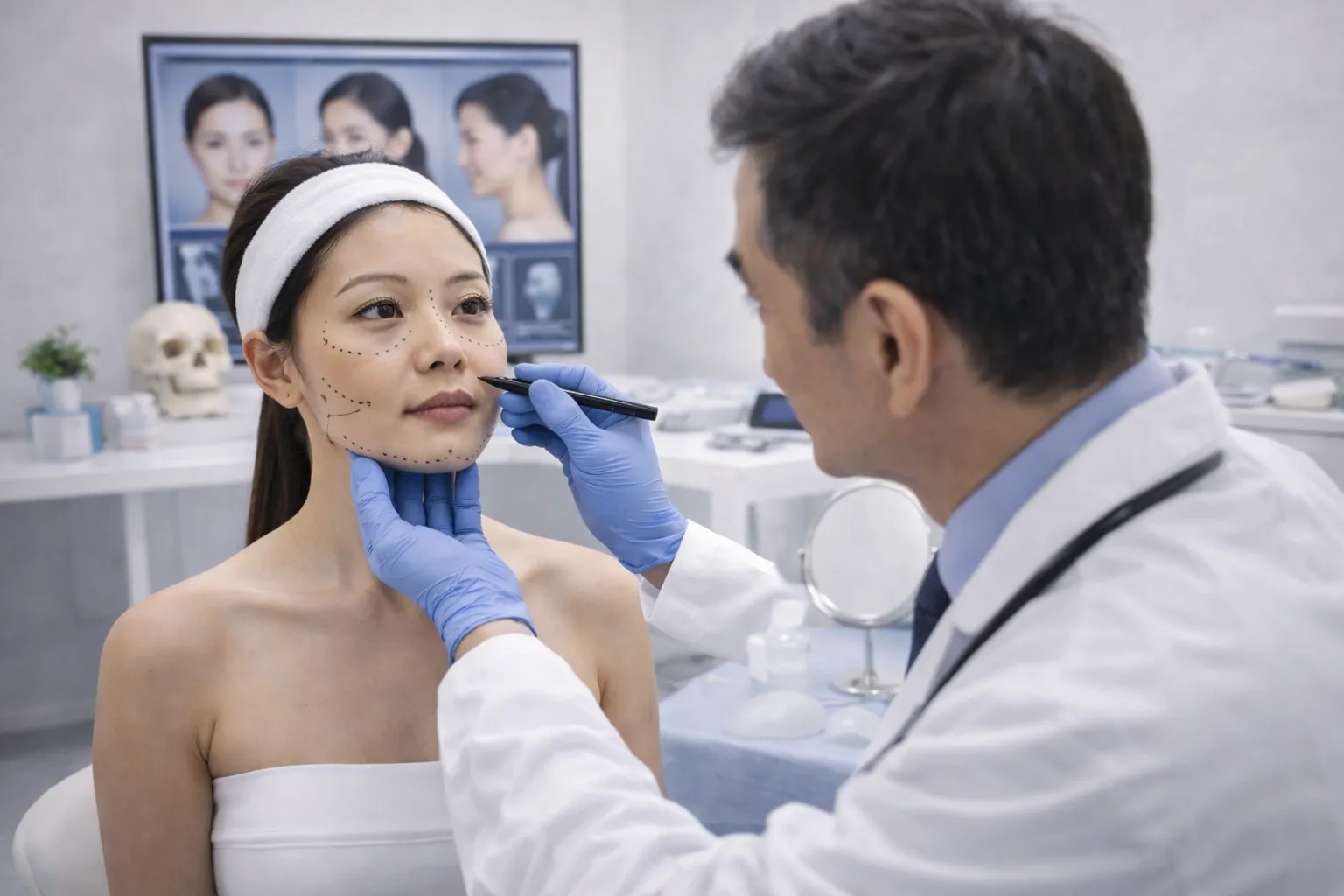
Facial surgery planning
Facial surgery
Personalized facial treatment planning based on facial structure, goals, and suitable recovery time, with a focus on natural-looking results and follow-up care.
Facial surgery
Personalized facial treatment planning based on facial structure, goals, and suitable recovery time, with a focus on natural-looking results and follow-up care.
Facial surgery should begin with assessment of facial structure, existing proportions, skin, previous scars, expectations, and acceptable recovery time. The doctor helps identify which goals may suit surgery, which may be better addressed non-surgically, and what should be planned step by step for a balanced and natural-looking result.
Facial surgery planning may involve several areas, but not everything needs to be done at once. The key is choosing what is necessary and suitable for your actual face.
Assessment of facial structure, front and side profiles, and the balance of eyes, nose, chin, facial contour, and patient goals.
May include eyelid, nose, chin, facial contour, lifting, or other procedures when suitable for the individual indication.
Aftercare may include wound review, swelling and bruising assessment, symmetry monitoring, scar care, and timing for return to activities.
Discuss goals, facial structure, existing proportions, expectations, reference photos, and health limitations.
Decide what to do, what not to do, and what should come first so the overall result stays balanced.
Review health, medications to pause, pre-surgery care, and a recovery schedule that fits real life.
Follow wounds, swelling, bruising, symmetry, activity guidance, scar care, and review appointments.
It should begin with an overall facial assessment and goal review, not only by choosing a procedure from reference photos. The doctor helps prioritize what is necessary.
Planning should follow the original facial structure, choose appropriate size or shape changes, and consider the balance of the whole face.
Recovery depends on the procedure and individual health. Some procedures have less swelling or bruising, while others may take several weeks to settle.
Yes. Follow-up helps monitor wounds, swelling, symmetry, and aftercare needs during each stage of recovery.
This page is general information and does not replace medical consultation. Results, risks, and recovery vary for each person.