Key Takeaways
- The food that helps knees most is the overall eating pattern, not a single miracle food. An anti-inflammatory Mediterranean diet rich in vegetables, fruit, fish, and olive oil reduces inflammation and helps control weight.
- Omega-3 from fish, adequate vitamin D, and keeping a healthy weight all support joint health, while popular supplements like glucosamine and chondroitin have limited, inconsistent evidence.
- Foods and supplements are supportive only — they do not replace weight loss and exercise. If knee pain is chronic despite foundational care, GAE (genicular artery embolization) is a non-surgical option for suitable patients.
An eating pattern that's good for the knees
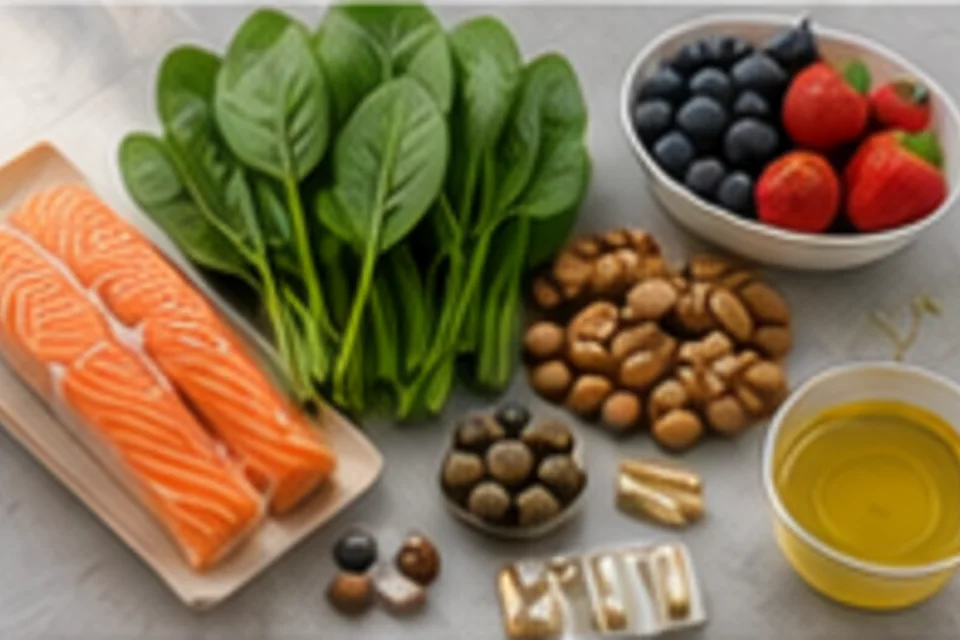
What genuinely helps knees is not any single miracle food but the overall eating pattern. A Mediterranean-style diet rich in vegetables, colorful fruit, whole grains, fish, nuts, and olive oil has anti-inflammatory properties and helps control weight — both of which directly benefit the joint.
Conversely, a diet high in sugar, refined carbs, and fried food promotes inflammation and makes weight gain easy, so it should be reduced. The single most important thing food does for the knees is help you maintain a healthy weight, because weight directly affects the load on the joint.
- Emphasize vegetables, colorful fruit, whole grains, fish, and olive oil
- Cut sugar, refined carbs, and fried food
- The key goal is helping you keep a healthy weight
Nutrients with a supporting role
Some nutrients have evidence supporting joint health and inflammation. Omega-3 from oily sea fish like salmon and sardines has anti-inflammatory properties, adequate vitamin D matters for the bone and muscle that support the joint, and colorful vegetables and fruit provide antioxidants.
That said, understand that these nutrients support rather than treat knee osteoarthritis directly. Getting them from real food is the best approach, while pill supplements should be taken when there is an indication — such as a low vitamin D result — and with a doctor's advice.
Omega-3
From oily sea fish like salmon and sardines; has anti-inflammatory properties.
Vitamin D
Matters for the bone and muscle that support the joint; supplement if found low.
Colorful produce
Provides antioxidants and fiber, and helps with weight control.
Popular supplements: the truth about the evidence
Popular joint supplements like glucosamine and chondroitin have overall evidence that remains limited and inconsistent — some people feel better, others no different from placebo. They are generally considered fairly safe to try, but should not be expected to replace weight loss and exercise.
What to watch out for is marketing that overclaims that supplements rebuild cartilage or cure osteoarthritis, which is not backed by strong evidence. If you want to try one, set realistic expectations, give it time to observe the effect, and consult a doctor — especially if you have health conditions or take other medications.
| What you take | The claim | Evidence |
|---|---|---|
| Anti-inflammatory diet | Reduces inflammation, controls weight | Good, especially via weight control |
| Omega-3 | Anti-inflammatory | Some — a supporting role |
| Vitamin D | Supports bone and muscle | Matters when deficient; test before supplementing |
| Glucosamine/chondroitin | Repairs cartilage, reduces pain | Limited and inconsistent — fine to try, not the mainstay |
Beyond diet: chronic pain and the GAE option
Good food and supplements support joint health and weight control, but they cannot replace the best-evidenced foundation: weight loss and exercise to strengthen the muscles around the knee, plus pain medication as appropriate.
For people with chronic osteoarthritis knee pain that has not improved despite diet changes and foundational care, but who are not ready for — or do not yet need — a joint replacement, GAE (genicular artery embolization) is a non-surgical option that reduces inflammation and pain in suitable patients. It is a needle-sized procedure with fast recovery, and suitability is assessed individually by the medical team.
- Foods and supplements are supportive, not a replacement for weight loss and exercise
- If chronic pain persists despite the basics, ask a doctor to assess GAE
- GAE is a non-surgical option before a replacement, for suitable patients
Frequently Asked Questions
What foods genuinely help the knee joints?
There is no single miracle food, but an anti-inflammatory Mediterranean pattern rich in vegetables, fruit, fish, and olive oil reduces inflammation and helps control weight, which directly benefits the joint. Adequate omega-3 and vitamin D play a supporting role.
Do glucosamine and chondroitin help?
The overall evidence remains limited and inconsistent — some people feel better, others no different from placebo. They are generally fairly safe to try, but should not be expected to replace weight loss and exercise, so set realistic expectations.
Do I need to take supplements every day if I have knee osteoarthritis?
Not necessarily for everyone. What matters more is the overall eating pattern and maintaining a healthy weight. Pill supplements should be taken when there is an indication, such as low vitamin D, and with a doctor's advice if you have conditions or take other medications.
I've changed my diet but my knee still hurts — what should I do?
Diet is only supportive; the main foundation is weight loss and exercise. If pain remains chronic despite full care, see a doctor for assessment. For those who want to avoid surgery, GAE may be a suitable option.
References
- OARSI guidelines for the non-surgical management of knee, hip, and polyarticular osteoarthritis (Osteoarthritis and Cartilage, 2019)
- 2019 American College of Rheumatology/Arthritis Foundation Guideline for the Management of Osteoarthritis of the Hand, Hip, and Knee (Arthritis & Rheumatology, 2020)
Want to know which care plan fits you?
Share your symptoms, health history, medications or prior procedures, and personal goals. Our team can help arrange a medical assessment.
Consult YOUNIFY Clinic