GAE for Knee Pain Without Joint Replacement Surgery

A minimally invasive option for selected patients with chronic knee osteoarthritis pain who are not ready or not suitable for knee replacement surgery.

GAEKnee painKnee osteoarthritisNon-surgical knee care
Small access

Performed through a tiny catheter pathway

Selected cases

Cause and disease stage are reviewed first

Ongoing plan

Rehab and load management still matter

How GAE Works: Treating the true source of pain

By addressing abnormal blood vessels rather than focusing only on the joint itself, we can reduce inflammation at its source and provide more durable pain relief compared with traditional therapies.

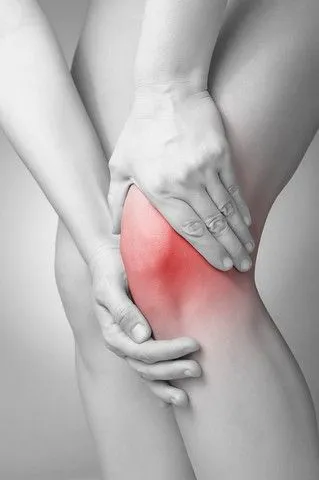
Genicular Artery Embolization (GAE) is a non-surgical, minimally invasive procedure used to relieve knee pain caused by osteoarthritis. It works by targeting abnormal blood vessels around the knee that drive ongoing inflammation and pain.

Using advanced imaging guidance, the doctor carefully reduces these abnormal vessels while preserving normal blood flow to the knee. GAE can be especially helpful for patients whose symptoms do not improve with medications, physical therapy, or injections such as steroids or hyaluronic acid.
GAE highlights

  • A non-surgical, minimally invasive treatment for knee osteoarthritis pain
  • Performed through a tiny pinhole (about 0.6 mm) with no incision or hospital stay
  • Works by blocking abnormal blood vessels that cause inflammation and pain
  • Takes about 1-2 hours under local anesthesia
  • Provides long-lasting pain relief with quick recovery and minimal side effects
  • A globally recognized treatment for early to moderate knee osteoarthritis that targets the root cause of pain with minimal risk

Efficacy and Safety

Technical Success

~100%

Adverse events

Adverse events with GAE were typically minor and transient, with ~2.0% of patients requiring medication and ~0.3% of patients requiring hospitalization.

Pain reduction (VAS score)

WMD for VAS improved at 1, 3, 6 and 12 months.

WOMAC (pain + function)

Higher scores indicate worse pain, stiffness, and functional limitations — scores decreased after treatment.

* Values shown are pooled average changes (WMD) versus baseline across multiple cohorts.

Step-by-Step Treatments to Reduce Abnormal Blood Vessels

We choose the right approach based on your symptoms and assessment.

Injection Technique for GAE

This injection is different from common treatments such as hyaluronic acid or nerve block injections. It directly targets abnormal blood vessels that cause pain.

It is performed by specialists using a substance designed to reduce these vessels. Because it treats the cause of pain, the results can be longer-lasting.

More than 80% of patients experience significant improvement in appropriate cases, and this treatment has been provided to thousands of patients with no serious side effects reported.

>80% significant improvement (selected patients)

Catheterization for GAE

For more targeted treatment, we offer catheterization therapy, also called Genicular Arterial Embolization (GAE), a minimally invasive procedure used to treat abnormal blood vessels.

  1. First, a small tube similar to an intravenous (IV) line is inserted into a blood vessel. A very thin and soft catheter (about 0.6 mm wide) is then gently guided through the blood vessels from the wrist or foot to the painful area.
  2. Once the catheter reaches the area causing pain, the abnormal blood vessels can be clearly seen, and the treatment substance is delivered directly to them.
  3. When the substance is injected through the catheter, it forms tiny particles that selectively reduce blood flow in abnormal blood vessels. This causes the problem vessels to shrink and close, while normal vessels remain healthy.

Medical substance used

  • Imipenem/Cilastatin, safely used for over 20 years.
  • Forms tiny particles that selectively reduce blood flow in abnormal vessels.
  • Helps reduce inflammation at its source and provide durable pain relief.
Procedure and Imaging

See How GAE Works

This page now keeps the GAE-specific procedural detail in one place, including the catheter pathway, abnormal vessel reduction, and before-after imaging examples for patients comparing non-surgical knee pain treatment.

>80%
Significant improvement in selected patients
0.6mm
Small catheter diameter
20+ yr
Medical substance safety experience
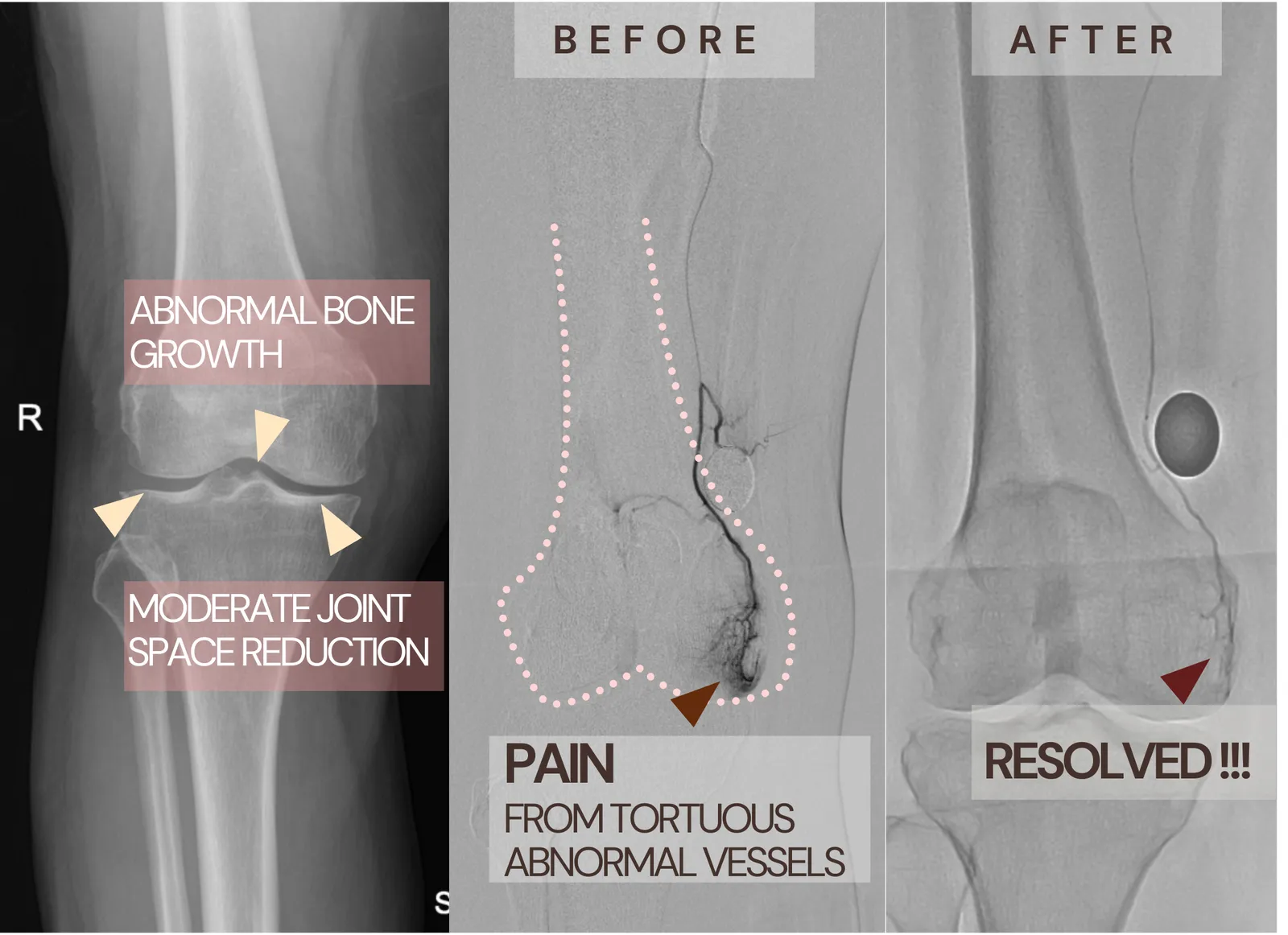
GAE before and after imaging comparison
Before-After GAE

Imaging comparison showing reduction of abnormal blood vessels following GAE treatment.

Are You a Candidate for GAE?

GAE may be a suitable non-surgical knee pain treatment for patients with ongoing knee osteoarthritis pain that does not improve with standard treatments.

You may be a good candidate if

  • You have chronic knee pain caused by osteoarthritis
  • Pain continues despite medications, physical therapy, or injections
  • Knee pain limits daily activities such as walking, standing, or climbing stairs
  • You are not ready for surgery, or surgery is not recommended for you

Who may not be suitable

  • Knee pain is caused by acute injury, infection, or fracture
  • There is severe joint deformity requiring immediate surgery
  • Certain medical conditions make the procedure unsafe

A personalized decision

At YOUNIFY Clinic, candidacy for GAE is determined through careful clinical assessment and imaging review.

Our doctors consider your symptoms, overall health, and stage of knee disease to recommend the most appropriate treatment — whether GAE or another option.

Not sure if GAE is right for you?

A consultation can help clarify your options and guide you toward the most suitable care.

Book a consultation

GAE for Knee Pain Without Joint Replacement Surgery

Is GAE surgery?
It is not knee replacement surgery. GAE is performed through a small catheter access, but suitability must be confirmed by a doctor.
Does GAE cure osteoarthritis?
No. The goal is symptom and inflammation control in selected patients, not reversal of joint degeneration.
How long is recovery?
Recovery is usually shorter than major surgery, but timing depends on your health, knee condition, and your doctor's instructions.