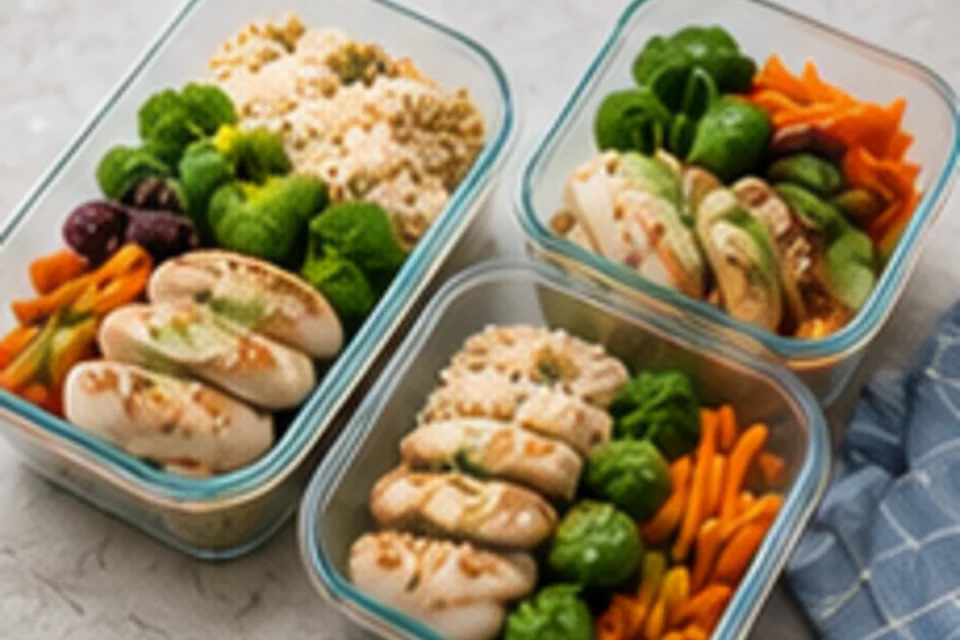
Key Takeaways
- Clean eating means favoring whole, minimally processed foods — lean meat, eggs, vegetables, fruit, whole grains — and cutting back on highly processed foods, sugar, and fried food.
- A practical plate rule is a palm of protein, half a plate of vegetables, and a fist of complex carbs, which keeps you full and controls energy without counting every bite.
- The key caveat is that 'clean' does not always mean low-calorie — clean eating in overly large portions still won't lose weight, because you still need a calorie deficit. For those who try and still fall short, medical options exist.
What is clean eating?
Clean eating is an approach that favors foods close to their natural state and minimally processed — fresh ingredients like lean meat, eggs, fish, vegetables, fruit, whole grains, and healthy fats — while cutting back on highly processed foods, sugar, fried food, and sugary drinks. The idea is to choose foods that deliver good nutrition per calorie.
The upside of clean eating is that you usually get more fiber, protein, and vitamins, staying full longer for a reasonable amount of energy. But it's important to understand that 'clean' does not always equal 'low-calorie.' Many healthy foods — nuts, avocado, olive oil — are energy-dense, so overall portions still need to be managed.
- Favor fresh, minimally processed, whole foods
- Cut back on highly processed foods, sugar, fried food, sugary drinks
- Clean ≠ always low-calorie — you still control portions
How to build a plate that loses weight
A plate rule that's easy to follow without counting every calorie is to divide the plate in three: about a palm of protein, half a plate of non-starchy vegetables, and roughly a fist of complex carbohydrates, with a little healthy fat. This gets you enough protein and fiber, keeps you full, and controls total energy on its own.
Protein is the star of a weight-loss meal, because it keeps you full and helps preserve muscle while you lose fat. Vegetables add volume for very few calories, so you feel full. For carbs, choose unrefined options like brown rice or sweet potato so energy releases slowly and hunger comes later.
| Plate part | Portion | Examples |
|---|---|---|
| Protein | About a palm | Chicken breast, fish, eggs, tofu |
| Non-starchy vegetables | Half the plate | Broccoli, leafy greens, tomato |
| Complex carbs | About a fist | Brown rice, sweet potato, quinoa |
| Healthy fat | A little | Olive oil, avocado, nuts |
Clean eating still needs a deficit, and the medical options
The trap many people fall into is thinking clean food can't make you gain no matter how much you eat. In reality, clean eating in overly large portions — especially energy-dense foods like nuts and healthy fats — still won't lose weight, because fat loss depends on a calorie deficit. Clean eating helps you stay full and control portions more easily, but it does not cancel this principle.
If you eat clean and manage portions diligently and still plateau or regain, that is not failure. At YOUNIFY we manage weight loss end to end, starting with behavior and nutrition as the foundation (lifestyle intervention), adding GLP-1 medication when appropriate, and endoscopic sleeve gastroplasty (ESG) for those who want greater, non-surgical results — all guided by a specialist team.
Lifestyle intervention (the base)
An individualized nutrition and behavior program that builds on clean eating into habits you can actually sustain.
GLP-1 medication
Helps reduce hunger and makes portion control easier, used under medical supervision.
Endoscopic sleeve gastroplasty (ESG)
Sutures the stomach smaller through an endoscope via the mouth — no incisions, faster fullness, greater lasting loss.
Frequently Asked Questions
Why am I not losing weight even though I eat clean?
The common reason is that even if the food is clean, the total amount is too much to create a calorie deficit — especially energy-dense foods like nuts, avocado, oil, and grains. Try the portion rule of a palm of protein, half a plate of vegetables, and a fist of carbs, and reassess between-meal snacks.
Does clean eating mean cutting out carbs?
No, you don't have to cut carbs. Just choose unrefined complex carbs like brown rice, sweet potato, or quinoa and keep portions to about a fist per meal. These provide fiber and slow-release energy, keeping you full and delaying hunger.
What are good clean snacks?
Choose snacks with protein or fiber — unsweetened yogurt, a boiled egg, fresh fruit, or a modest portion of nuts — because they keep you full and control hunger before the next meal. Avoid sweets, fried food, and sugary drinks that are high in calories but leave you full only briefly.
How is clean eating different from calorie cutting?
Clean eating focuses on food quality, while calorie cutting focuses on energy quantity. The two work well together, because clean food keeps you full for a reasonable amount of energy, but ultimately weight loss still relies mainly on a calorie deficit.
References
- Maintenance of Lost Weight and Long-Term Management of Obesity (Medical Clinics of North America, 2018)
- Improvement of Obesity-Related Comorbidities After Bariatric Procedures: A Network Meta-Analysis of Endoscopic Versus Surgical Interventions (Digestive Diseases and Sciences, 2026)
Want to know which care plan fits you?
Share your symptoms, health history, medications or prior procedures, and personal goals. Our team can help arrange a medical assessment.
Consult YOUNIFY Clinic